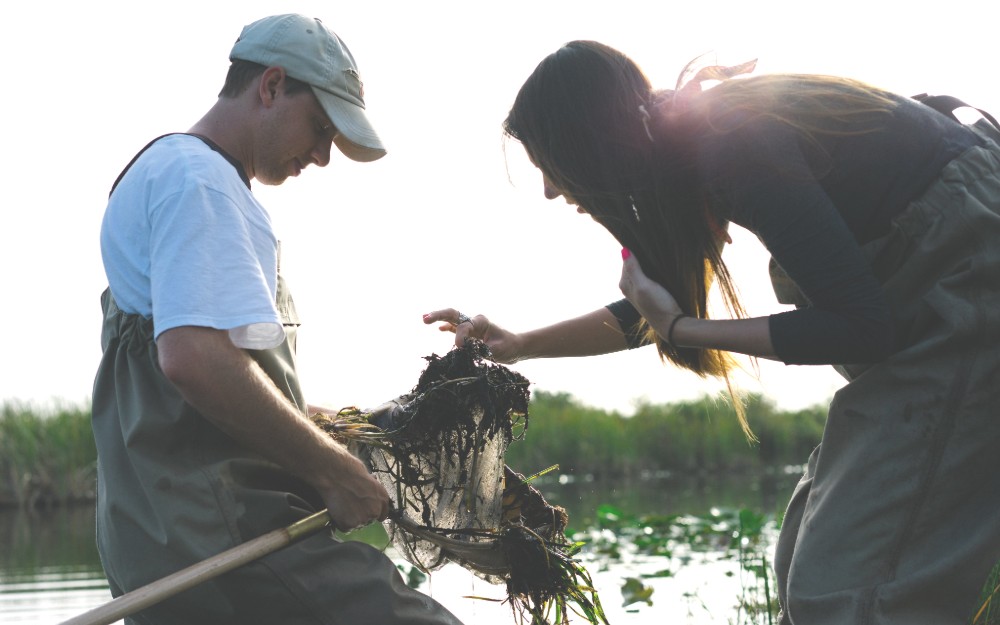
We examine how disturbances in the form of global climate change, extreme weather events (such as tropical storms, fires and hurricanes) and shifting approaches to water management interact with coastal ecosystem structure, functions and services to people.
By conducting persistent research in the freshwater wetlands, mangrove swamps and shallow seagrass communities along the two major drainages of the Everglades National Park, we employ powerful long-term datasets to determine how physical disturbances interact to determine ecosystem processes and trajectories of change. Ecologists work with social scientists and water managers to inform adaptive management of coastal ecological resources.
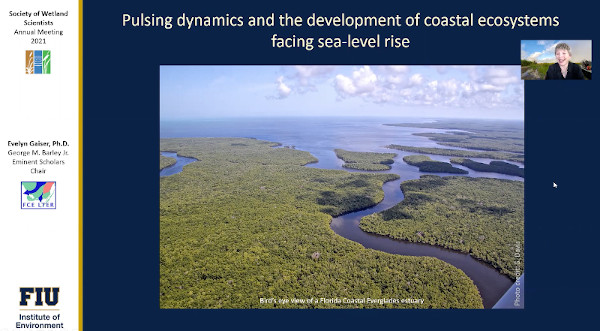
Please view Dr. Evelyn Gaiser's plenary talk at the 2021 Society of Wetland Scientists Annual Meeting for an overview of FCE research.
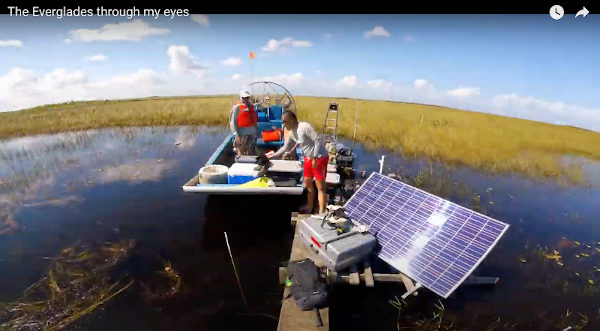
Please view Dr. Junbin Zhao's video of his FCE field work experiences in the Everglades from 2016-2019.
Virtual Tour of FCE LTER Sites
Key Findings
Please view the Florida Coastal Everglades LTER Site brief for additional information. A one-page version of the FCE LTER Site brief includes QR codes that link to the full version of the site brief and the virtual tour of FCE LTER sites.